Resofund Special Show

ResonanceFM LOGO 300dpi a1

Resonance FM needs your help to stay on air. Anyone who donates £2 or more to the station will receive a special edition of The Bike Show “A Night on a Bare Mountain”.

Be sure to check out the fundraising auction which will be live on air over the weekend of the 15th and 16th February. There are some amazing lots including the following bike related objects and experiences including a trip to Paris to meet Paul Fournel, writer and author of receive a limited collectors edition copy of his book Vélo and art print, courtesy of Rouleur Magazine.

[purchase_link id=”3607″ text=”Donate via Paypal” style=”button”]

School level data on cycling to school

Cycling Oxford

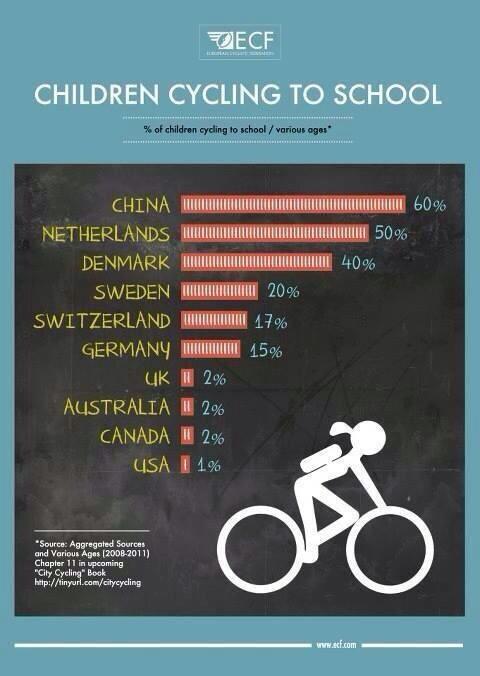
A recent flurry of twitter discussion on the very low level of cycling to school in Britain, and how poorly this country compares to more cycling-friendly places, prompted me to look for school level data on how children travel to school.
cycle to school

In the map below is every school in England, with data on mode of travel to school from the School Census 2011. The red dots denote schools where less than 2 per cent of children cycle, the purple dots where 2-5% cycle, the blue dots where 5-10% cycle and the green dots where more than 10% cycle.

Why 2011? It’s the most recent data there is since the government stopped collecting this data. It defies belief that with a growing epidemic of childhood obesity, and evidence that fewer kids are walking or cycling to school, the government should respond by pushing its head further into the sand.

Here’s a map of just the schools where more than 10% of children cycle to school:

The top schools in terms of cycling to school? Step forward the Parkside Federation Academies in Cambridge, who reported more than 60% cycling to school.

The schools with least car-dependent pupils were Sarah Bonnell School in Newham and Capital City Academy in Brent, both reporting less than 0.3% of children travelling to school by car. The most car-bound schools are Adlington Primary School in Cheshire, Windlestone School in County Durham and Pannal Primary School in North Yorkshire, which reported a full 99% of children travel to school by car.

Finally, here’s a map showing all schools reporting more than 80% of children get to school by car:

The raw data is available on a Google Fusion Table. I merged the census data with a different dataset containing school addresses, and geocoded that using Google’s geocode service. A few caveats:

1. The School Census on travel to school mode is conducted by a show of hands in assembly. So must be taken with some caution.

2. Some schools did not report cycling figures, all that appears in the data is an ‘x’.

3. Some schools on the map didn’t report any data at all. I think these are mostly independent schools, perhaps they are exempt from the reporting requirements.

4. It’s possible that Google’s geocode process has not processed all the schools, this may take a few more hours/days.

While the low levels of cycling to school is depressing, most primary school children and a large minority of secondary school children still walk to school, a healthy and sociable option, though it does seem walking to school rates are gradually declining in favour of the motorised ‘school run’.

The same data (and more) is presented in a less rough-and-ready way by the School Travel Health Check website.

Thanks to Richard Evans for pointing out that this data exists. And Tejvan Pettinger for the photo.

The Healing Machine

CHIN Picnic Criterium Races 2012 044

What makes a 40-year-old man take up bike racing? Jack Thurston talks with Bill Strickland, American cycling journalist, author of a clutch of cycling books including a memoir, Ten Points, which tells of how his quest to make a mark on his local amateur bike racing scene helped him come to terms with his own inner demons caused by the torture he suffered as a child at the hands of an abusive father. Bill also talks about the fallout from the disgrace of Lance Armstrong, the state of doping in today’s pro peloton and his #CapsNotHats campaign. Plus Jon Spencer tells of his journey to become a Super Randonneur.

Campaigning for Cycling

IMG_3495

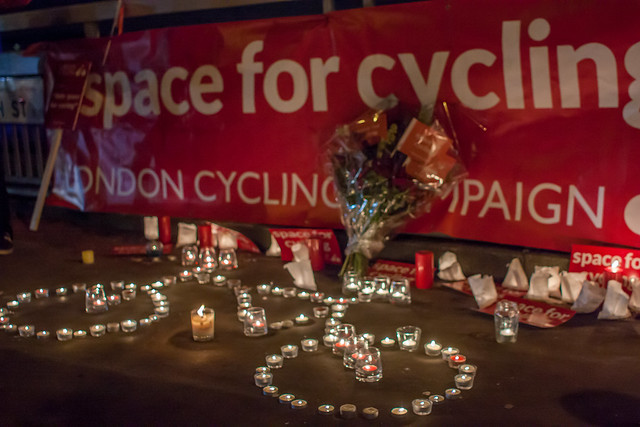
In the middle of possibly the worst week for cycling fatalities in London Mike Cavenett of the London Cycling Campaign talks about what his organisation is doing to change things in the city and how an effective cycling campaign requires a single, simple message clearly and imaginatively presented, mass mobilisation and relentless pressure on political decision-makers.

Image credit: zefrog

High Tech and High Stakes in the Bicycle Boom

Hub gear manufacturer Sturmey Archer sits in the pantheon of iconic bicycle brands, most famous for its hugely popular three speed hub gears. Tony Hadland tells the intriguing story of the invention of the hub gear, a story of gifted young engineers, canny entrepreneurs in the high tech bicycle boom of the 1890s. Tony Hadland is the author of “Raleigh: Past and Presence of an Iconic Bicycle Brand” and “The Sturmey Archer Story”.

Going the Distance

IMG_5893

For many cyclists, breaking through the 100 mile barrier opens up a whole new world of long distance cycling. Kieron Yates, a two time finisher of the 1200km Paris-Brest-Paris ride, joins Jack Thurston to talk about the allure of going the distance, with advice from a handful of members of the global randonneuring scene. For more on randonneuring in the UK, check out Audax UK’s calendar of events.

High on a Mountain Top

Since the very earliest years of the bicycle, adventurous cyclists have been unable to resist the allure of the mountains – the challenge of riding up and the thrill of freewheeling down the other side. Mountains are also the crucible of many of the most dramatic moments in professional bike racing. Daniel Friebe and Pete Goding, the authors of Mountain Higher: Europe’s Extreme, Undiscovered and Unforgettable Cycle Climbs join host Jack Thurston to talk about the quest for ever more exhilarating climbs and breathtakingly beautiful places. I

In a podcast-only extra, Bill Chidley reports back from the Annual General Meeting of the London Cycling Campaign, where important details of the Space For Cycling campaign were agreed.

Photo credit: Pete Goding